February is the ideal month to visit Mugello, a region rich in history, culture, and natural landscapes that reveal the most authentic side of Tuscany. Mugello preserves historical treasures that are often little known, telling ancient stories and local traditions. Among these stand out castles, towers, and historic residences, which rise as silent witnesses of centuries of Florentine rule and the presence of the Medici family in the valley. Walking among these buildings means immersing yourself in a past full of fascinating events, discovering how political power, daily life, and art were intertwined in the villages and countryside of Tuscany.
Posted in: Curiosities
Castles and Villages of the Mugello: A Journey Through History and Tuscan Landscapes
Publication Date Monday, February 9, 2026
Vanessa Contino
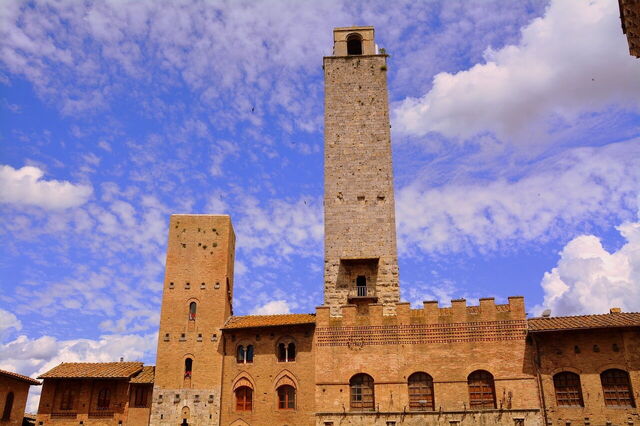
Palazzo dei Vicari – Scarperia
One of the most captivating places in Mugello is undoubtedly the Palazzo dei Vicari in Scarperia, located in the heart of the medieval village. Since the 14th century, it has symbolized Florentine authority over the territory. This impressive building, constructed between the 14th and 15th centuries, was the official residence of the Florentine vicars, officials appointed by the Republic of Florence to administer and control the surrounding villages and countryside. Today, the palace houses a public museum, where visitors can admire frescoes, coats of arms, and historic rooms that tell not only the life of the vicars but also the political and social history of the area during the Middle Ages and Renaissance.
Strolling through the streets of the surrounding village is like stepping back in time: cobbled streets, still-active artisan workshops, and small traditional cafés create a unique atmosphere where history and contemporary life interact in a continuous dialogue.
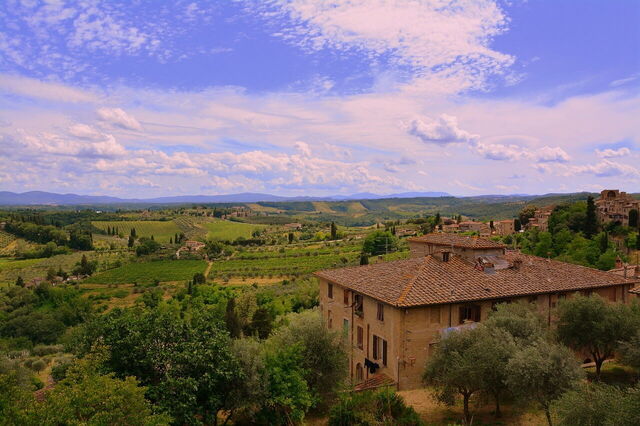
Castle of Barberino – Barberino di Mugello
A few kilometers from Scarperia, in the historic center of Barberino di Mugello, stands the Castle of Barberino, a splendidly preserved medieval fortress. Its origins date back to the 11th century, and much of the original structure has been maintained over time, from the imposing battlemented walls to the elegant towers and the inner courtyard, which now hosts visitors and cultural events. Walking through its rooms and along the battlements is like traveling back in time: the castle’s strategic and symbolic role over the centuries—as both a defensive stronghold and a noble residence—is clearly felt.
In addition to its historical value, the Castle of Barberino offers breathtaking views of the valley, perfect for photography, walks, and experiencing the authentic Tuscany.
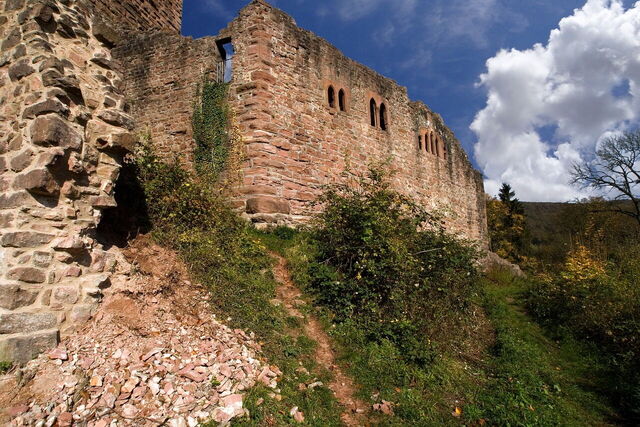
Fortress of San Martino – San Piero a Sieve
Those who love walks immersed in nature should not miss the Fortress of San Martino, located in San Piero a Sieve, in the heart of the Mugello. Less known than other local fortifications, this medieval fortress preserves all the charm of ancient defensive works. The fortress is surrounded by woods and trails, ideal for cultural walks and light trekking, offering the opportunity to combine local history with direct contact with nature.
Admiring the original fortress walls, one can easily imagine life in the past, when it was necessary to monitor and defend the Florentine territory. At the same time, the views from the surrounding heights offer splendid panoramas over the valleys and medieval villages. Visiting the Fortress of San Martino allows you to immerse yourself in an authentic territory, where history and nature merge in perfect harmony.
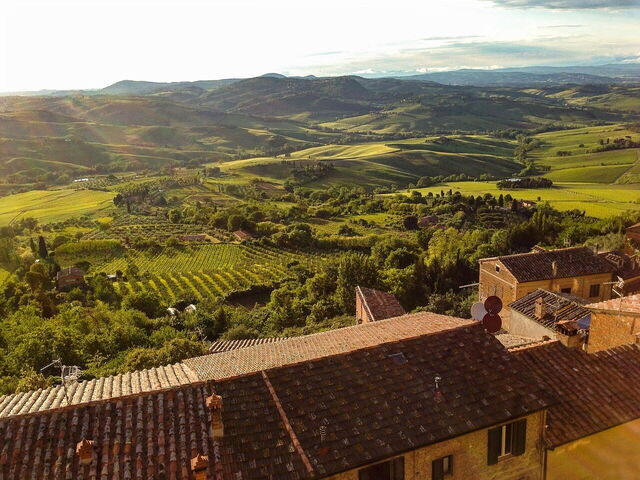
Villa Medicea di Cafaggiolo
Finally, one cannot forget the Villa Medicea di Cafaggiolo, one of the most important historic residences in Mugello and a symbol of the Medici’s power and grandeur during the Renaissance. Built on a previous medieval fortification and transformed over the centuries into a noble residence, the villa is today a true historical and cultural landmark of the area.
The villa sits in a highly evocative natural setting: hills, woods, and cultivated fields surround the building, creating an atmosphere that evokes both rural and aristocratic life of the past. Walking around the surroundings, one can imagine how the Medici used these residences not only as holiday homes but also as administrative centers and symbols of their power over the territory. The Villa di Cafaggiolo is therefore not only an architectural heritage but also a cultural asset that bears witness to the history and traditions of the Mugello, offering insights for those who wish to discover the most authentic Tuscany, full of art, history, and stunning landscapes.
These castles and villages tell the story of an authentic Tuscany, where history naturally emerges from the landscape. Walking through Scarperia, exploring Barberino, or following the trails leading to the Fortress of San Martino offers an experience of quiet, panoramas, and small villages that have preserved their character intact.
To make your stay perfect, book a stay at Collichiari, where you can relax after exploring the main historic monuments of Mugello.
For more information on discovering historical and cultural monuments in Mugello, please refer to "History and Culture", an article that guides you on a journey of discovery through these enchanting places nestled in the Tuscan countryside.
In partnership with Trading Estate Service Srl