You still have time until 2 June 2024 to visit the exhibition “The Medici: People of Mugello - Family portraits from the Uffizi Galleries” at the Museum of Cutting Tools ('Museo dei Ferri Taglienti') in Scarperia e San Piero. This exhibition is organised by Fondazione CR Firenze and the Uffizi Galleries, as part of their respective projects 'Piccoli Grandi Musei' and 'Uffizi Diffusi'.
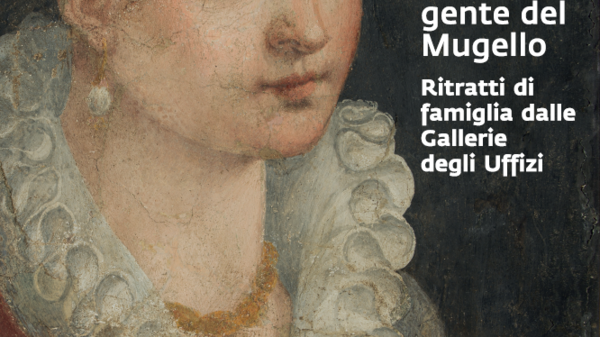
Inside the sumptuous Palazzo dei Vicari in Scarperia, you will find four paintings depicting members of the Medici family on display, recalling the deep-rooted presence of this family in the Mugello area. Brought directly from the Uffizi Galleries, these portraits were painted by eminent Florentine artists between the 1630s and 1880s.
We find a young Cosimo I de' Medici portrayed by Ridolfo del Ghirlandaio: although little more than a ten-year-old boy, he already appears proud and aware of his social position, as shown by the sumptuous robes and the coat-of-arms clearly visible at the top right, with the inscription "cosmo med".The portrait of Duchess Eleonora, Cosimo's wife and daughter of Don Pedro de Toledo, viceroy of Naples, was painted by Lorenzo Sciorina, a student of Bronzino. Sciorina presents a slightly different version of his master's famous work, which is currently housed at the Uffizi. The princess wears an elegant dress and, whereas in Bronzino's version she is depicted with her second son, here she is pictured accompanied by Garcia, her eighth child who died prematurely of malaria.
Finally, the portraits of Francesco I, depicted here in his thirties, and his second wife Bianca Cappello are noteworthy both for their intense expressions and the attention to detail in the background, fabrics and ornaments. Painted by artists from the circle of Santi di Tito and Alessandro Allori, the pictorial style of the two works reflects the prevailing artistic trends in Florence towards the end of the century. A curiosity: the portrait of Bianca Cappello was originally frescoed in the presbytery of the church of Santa Maria in Olmi, as the Grand Duchess was particularly devoted to the image of the Virgin venerated in this church; the painting was later removed to be transferred to the Florentine galleries in 1871.