Posted in:

Pratolino Park: Echoes of the Renaissance in the Park of Lost Wonders

Publication Date  Monday, August 3, 2026

There are mysterious places capable of evoking the atmosphere of times long past. Such is the case with the Medici Park of Pratolino—known to everyone as Villa Demidoff—a splendid UNESCO-protected site on the outskirts of Mugello.

Strolling along its paths, it almost feels like traveling back to the era of the Medici: back then, hydraulic automata came to life as guests passed by, artificial grottoes surprised visitors with sudden water displays, and stone colossi rose from the ponds. Here, wonder collides with a thrill of mystery: the monumental villa that once dominated the estate is no longer there. It has been literally erased from history, leaving behind a “void” that makes this place, if possible, even more fascinating.
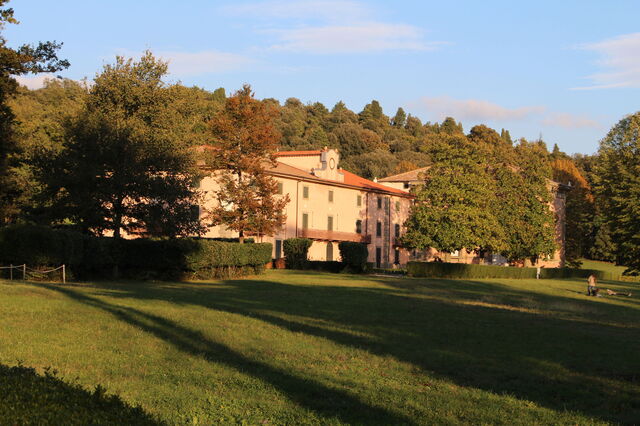
Villa Demidoff

From the Medici to the Demidoffs: The Two Faces of Pratolino and the Vanished “Villa delle Meraviglie”

It all began in 1568. Grand Duke Francesco I de’ Medici wanted a summer retreat that would leave the courts of Europe speechless. He commissioned the famous Florentine architect Bernardo Buontalenti, who created what contemporaries dubbed the “Villa delle Meraviglie” (Villa of Wonders): a total work of art in which the garden was brought to life by self-moving automata, artificial grottoes, and incredible water features.

With the end of the Medici dynasty, however, a slow decline began. In 1820, due to the unsustainable maintenance costs, Grand Duke Ferdinand III of Lorraine made a drastic decision: he had the splendid villa blown up. The demolition also wiped out the labyrinth of underground caves, erasing the automata’s complex mechanisms forever.

Today, almost nothing remains of that hydraulic marvel. The only surviving grotto is the Grotto of Cupid, now devoid of its fountains. However, Giambologna’s Colossus of the Apennines—the sculpture that still rises from the pond today—stands as an eternal guardian of this glorious past. Just half a century after the Villa’s destruction, the wealthy Russian Demidoff family purchased the estate, transforming the old barn into the current villa and redesigning the garden into a romantic English-style park.

Imagine by Sailko - Own work, CC BY 3.0

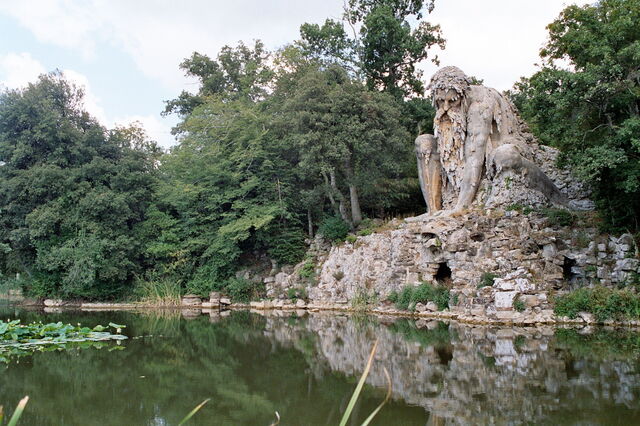
Colossus of the Apennines

The Giant of the Apennines and Its Secret Rooms

Although the villa has been lost, the park still preserves its most precious and mesmerising treasure: the Colossus of the Apennines. Sculpted by Giambologna between 1579 and 1580, this 14-metre-tall stone giant appears to rise directly from the waters of the pond, its body covered in sponges, mud and artificial stalactites that blend it inextricably with the surrounding natural landscape.

The real wonder, however, lies within. The Colossus, which is partially hollow, contains rooms and caves within it. It is said that a small fireplace was even built into the giant’s head: when lit, smoke would escape from his nostrils, creating the illusion that the statue was breathing. In the lower rooms, meanwhile, complex hydraulic mechanisms operated water features designed to entertain the Grand Duke’s guests.

Image by René Haas - Own work, CC BY-SA 4.0

Lake

A refreshing oasis nestled between history and nature

This deep connection to water and altitude also reveals Pratolino’s most delightful side, especially on hot summer days. Located about 450 meters above sea level, the park has always been a rejuvenating oasis. The Medici chose it not by chance, but precisely for the breezy air that descends from the Apennines, offering a pleasant coolness and temperatures several degrees lower than in the nearby Florentine basin.

While Buontalenti once enjoyed having water spray unexpectedly from beneath the paths to refresh and amaze passing nobles, today the park offers a more intimate and peaceful retreat, ideal for losing oneself among centuries-old trees and expansive lawns. As you walk along the avenues, your gaze continually encounters other fragments of that glorious past: the evocative Grotta del Cupido, which preserves the Buontalenti atmosphere intact; the imposing structure of the Scuderie; the solemn Fonte di Giove; and the hexagonal chapel, a mausoleum and guardian of the Demidoff family’s memories.

Today, Pratolino Park is no longer the sumptuous court theater envisioned by Francis I, nor is it the private estate of Russian princes. It has become a space that balances the grandeur of history with the tranquility of nature. Yet, amid the rustling of leaves stirred by the Apennine wind and the shadow cast by the great stone giant, that thrill of mystery has never faded. Pratolino remains a magical in-between realm, a place where what has been lost continues to live on in the imagination of anyone who steps through its gates. All you have to do is visit, stroll along its avenues, and let yourself be captivated by the charm of the “Villa delle Meraviglie” that no longer exists.

To enjoy the best of this corner of Tuscany, choose a Collichiari property and get ready to discover the secrets these hills have guarded for centuries.

In partnership with Trading Estate Service Srl