This autumn, in Scarperia — a village rich in history and tradition — art takes center stage with two exhibitions where different eras, languages, and deeply contrasting themes intertwine. On the one hand, delicate botanical watercolors evoke the elegance of the Medici gardens and the richness of the Renaissance table; on the other, the expressive power of contemporary art gives becomes the voice of historical memory and civil rights. Two exhibitions which, through art, invite reflection in two buildings steeped in history and culture: the Palazzo dei Vicari, and the Museo Spazio Brizzolari. Scarperia, with its historical settings and strong cultural vocation, reaffirms itself as a hub where ideas, visions, and creativity converge.
Posted in: Art and Exhibitions
Scarperia on Display: From the Medici Garden to Civil Rights
Publication Date Monday, November 3, 2025
Vanessa Contino
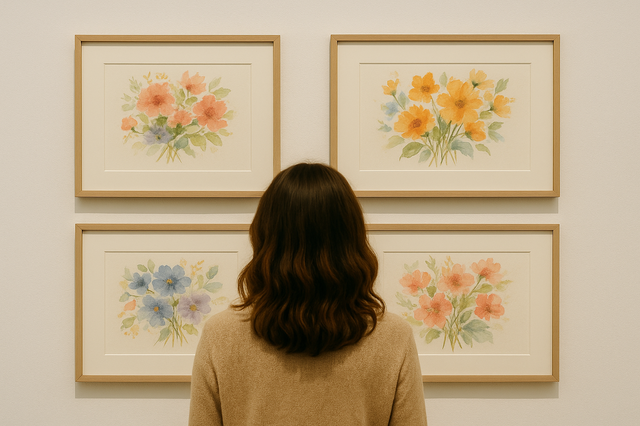
Places rich in history and art: Palazzo dei Vicari and Museo Spazio Brizzolari
Overlooking the large central square of Scarperia, the Palazzo dei Vicari is the historical and architectural heart of the village. Originally built as the residence of the Vicari—representatives of the Republic of Florence who governed the area—the palace maintains a strong visual and symbolic connection with its city of origin: its structure in fact echoes that of the more famous Palazzo della Signoria in Florence. The building’s current appearance is the result of restoration work carried out in the 1930s, which enhanced its medieval character with battlements and projecting stone corbels (beccatelli). A distinctive feature is the 42-meter-high tower, which hosts a majolica clock crafted by the historic Chini family of Borgo San Lorenzo. Today, the Palazzo serves as a museum and cultural venue, a living testament to the Medicean and Florentine heritage of the Mugello area.
Just a few minutes by car from the Palazzo dei Vicari is the Museo Spazio Brizzolari, a place rich in art and culture, born from an idea by Giuseppe Brizzolari to honor his brother Antonio, a Florentine artist who passed away in 2016. Spazio Brizzolari is now an open and inclusive cultural center, inspired by Antonio's own vision — he dreamed of creating a "Little Athens". Housed in a former industrial workshop in Pianvallico, the space hosts exhibitions, workshops, and creative experiences for all, with particular attention to young people, vulnerable individuals, and art enthusiasts. With a free and experimental approach, the space invites visitors into a world of wonder and transformation — embodying the same spirit with which Antonio Brizzolari gave shape to his art on paper, fabric, metal, and ceramic.
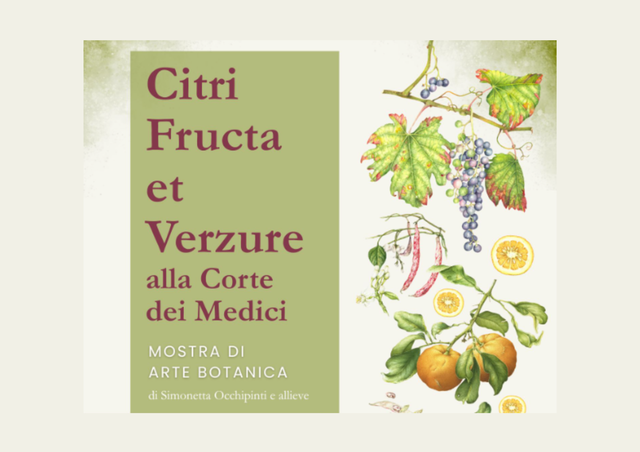
Palazzo dei Vicari presents the exhibition “Citri, Fructa et Verzure alla corte dei Medici”
From October 18 to November 23, 2025, Palazzo dei Vicari hosts "Citri, Fructa et Verzure at the Medici Court", a refined exhibition of botanical watercolor art curated by Simonetta Occhipinti and her students. The show invites visitors to explore two sides of the plant world in Renaissance Tuscany: its role in food culture and its aesthetic and symbolic value.
In an era often associated with lavish noble banquets, where meat was a marker of prestige and wealth, the Medici table revealed a surprisingly rich variety of fruits and vegetables—products of the land cultivated in the Tuscan countryside, many of which still grace our tables today. Here, botanical art becomes a bridge to the past, evoking flavors and gestures that speak of roots and tradition. The exhibition also focuses on the Medici’s passion for botanical collecting: potted citrus trees, exotic plants, and gardens filled with rare species. It was Cosimo I who first embraced this trend at the Villa di Castello, but Cosimo III brought it to its peak, commissioning the painter Bartolomeo Bimbi to create the famous oil painting tableaux of citrus fruits, documenting over one hundred different varieties. It is no coincidence that this exhibition finds its home in the Palazzo dei Vicari: a symbol of Medicean heritage, a place of power and culture that today transforms into a space where nature and art merge to tell the story of a Tuscany both ancient and contemporary—where beauty and cultivation are profound expressions of civilization.
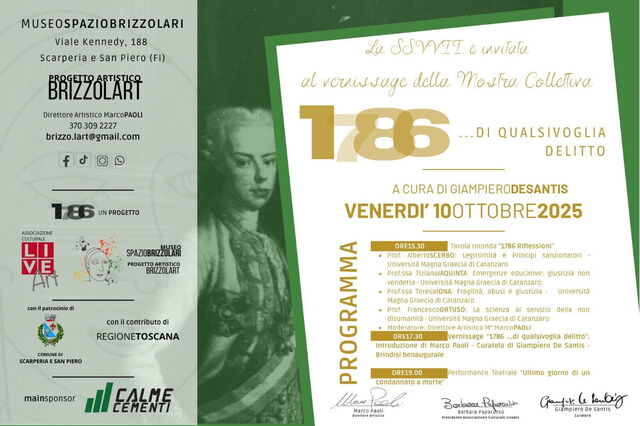
“1786… di qualsivoglia delitto (“1786… of any crime”): Collective exhibition at the Brizzolari Space Museum
From October 10 to November 30, 2025, the Museo Spazio Brizzolari, in the heart of the Mugello region, hosts “1786… of Any Crime”, a group exhibition that weaves together contemporary art, historical memory, and civic reflection. Inspired by the abolition of the death penalty in Tuscany in 1786, the exhibition features over 70 works, including paintings, photographs, and sculptures, created by 36 artists from various regions of Italy and abroad. The event, organized with the support of local and regional institutions, stems from a dialogue between territories—particularly Tuscany and Calabria—and unfolds as an open cultural platform, featuring talks, theatrical performances, and the awarding of the Premio Calme per l’Arte, dedicated to the memory of painter Antonio Brizzolari. An opportunity for the museum to become a space for dialogue and awareness, where art becomes a universal language of commitment and humanity.
This November, Scarperia becomes a place where past and present meet. On the one side, the delicacy of botanical watercolors; on the other, the power of civic art that questions the value of life and justice. Two exhibitions that are well worth seeing—not only for their artistic quality, but for their ability to spark reflection and emotion.
And if you're planning a visit, you can find the perfect stay by choosing a Collichiari property.
For further information regarding the exhibition "Citri, Fructa et Verzure alla corte dei Medici" (Citrus fruits, fruits and vegetables at the Medici court), please visit the dedicated page of the Proloco di Scarperia website. For information regarding the exhibition "1786... di qualsivoglia delitto" (1786... of any crime), please visit the Mugellotoscana.it website.
In partnership with Trading Estate Service Srl